
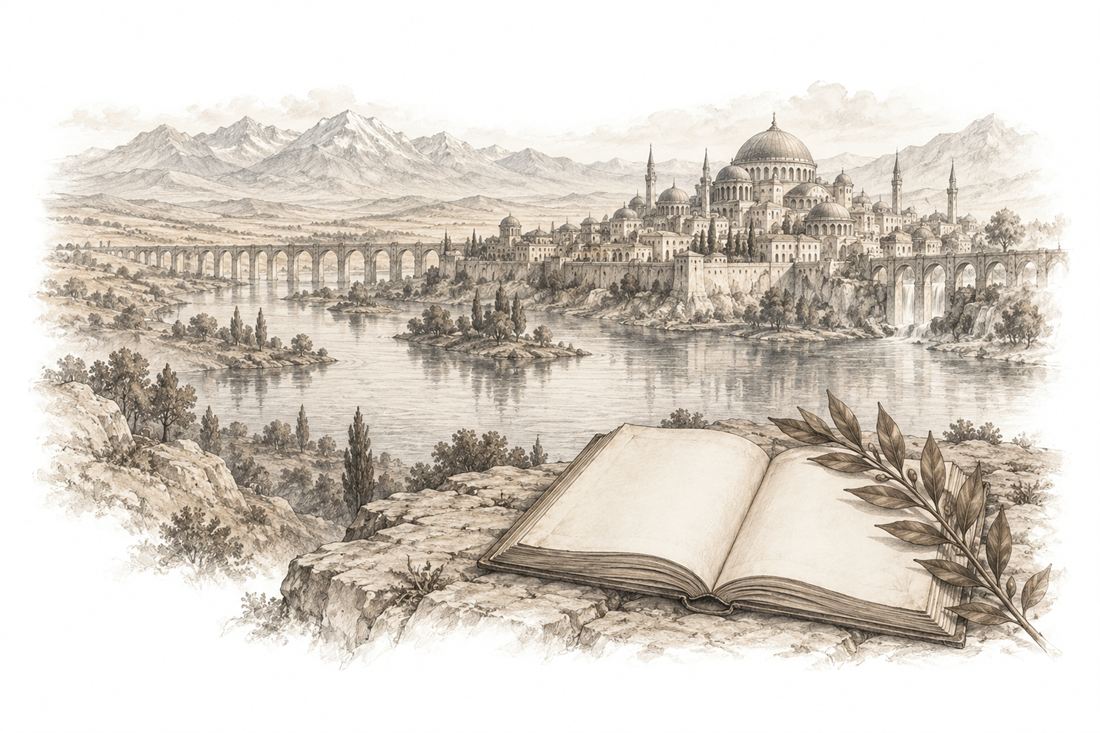
No one remembers who first extended a hand across the borders of the old kingdoms.
The chronicles offer many names. Kings, queens, philosophers, and generals are credited with having conceived the peace that would transform Scythia. In some accounts, it began with a marriage. In others, with a treaty signed upon a battlefield still wet with rain and blood.
One surviving fragment tells of two aging sovereigns who met beside a river, each having lost three sons to a war neither could remember beginning. They spoke until sunset, and when they parted, neither had surrendered a single acre.
Yet neither would march again.
Whether such a meeting occurred is uncertain. Perhaps it was merely a tale invented by those who wished to believe that wisdom might prevail where courage had failed.
But the tale endured.
And the peace, however it began, was real.
I The Unmaking of Borders
The first agreements were modest.
A road might be opened to merchants. A disputed river crossing placed under the protection of both kingdoms. Prisoners returned, tariffs reduced, or a harvest shared with a neighboring people whose fields had failed.
There was little ceremony in these early concessions. They were practical arrangements, born of necessity rather than affection.
Yet something remarkable followed.
The agreements held.
A merchant who had once paid three separate tolls to carry his goods across a valley found himself welcomed at its farthest market. A village accustomed to watching the northern hills for soldiers began watching instead for the arrival of spring caravans.
Children grew to adulthood without learning the names of neighboring kings as enemies.
It was not the end of rivalry. Pride remained, as did ambition, suspicion, and the long memories of those who had suffered.
But for the first time, rulers discovered that cooperation could enrich their kingdoms without diminishing their crowns.
Treaties multiplied. Roads were repaired. Bridges joined territories whose inhabitants had once considered the waters between them a necessary defense.
And with every passing generation, the borders that had defined the Age of Crowns became less important than the journeys made across them.
There were those who feared this change.
They spoke of weakened sovereignty, of ancestral sacrifices dishonored, of kingdoms surrendering their greatness one agreement at a time.
Their concerns were not always without merit. Some treaties favored the wealthy. Some roads carried foreign soldiers as readily as merchants. Some rulers discovered that prosperity could purchase influence more quietly than armies.
Yet the greater part of Scythia found reason to welcome the peace.
For those who had lived beneath the shadow of war, even an imperfect agreement was preferable to another generation of graves.
II The Works of Many Hands
Peace brought with it a luxury few kingdoms had ever possessed.
Time.
Time to build what would not be burned. Time to study what would not be stolen. Time to plant orchards whose fruit might be gathered by grandchildren yet unborn.
Across Scythia, the great works began.
Cities spread beyond their ancient walls. Aqueducts carried water across valleys. Roads climbed mountain passes once thought impassable. Harbors were deepened, observatories raised, and libraries established beneath vaulted ceilings of stone and timber.
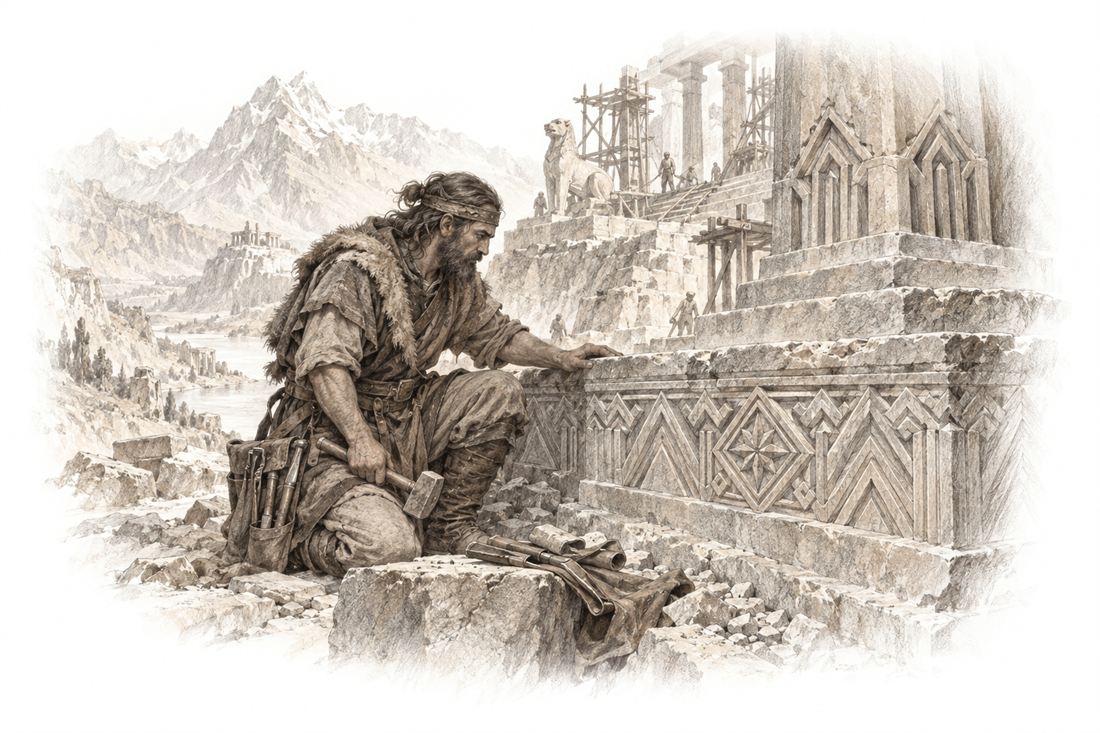
Craftsmen traveled freely between distant courts. A mason from the mountains might spend his youth studying the foundations of southern temples, then return home to build halls unlike any his ancestors had imagined.
Physicians exchanged remedies. Farmers learned new methods of cultivation. Scholars compared the movements of the heavens and discovered that observations made centuries apart, in lands separated by mountains and seas, could illuminate the same mysteries.
Even the magical arts, once guarded by solitary masters and jealous orders, became subjects of open inquiry.
What one people called a miracle, another sought to understand.
What one kingdom had kept secret, another offered to teach.
It was said that the greatest achievements of the Rebirth belonged to no single nation, for their foundations had been laid by a thousand hands.
This was not entirely true, of course.
There were masters whose names became renowned, patrons who claimed works they had merely financed, and laborers whose contributions were forgotten before the mortar had dried.
But the sentiment reflected something extraordinary about the age.
Its people had begun to imagine greatness as something they might accomplish together.
III The Inheritance of Wonder
As prosperity deepened, curiosity carried the peoples of Scythia beyond the boundaries of their familiar world.
Expeditions crossed deserts and climbed into the highest mountains. Ships followed unfamiliar coastlines. Surveyors entered forests whose depths had long been surrendered to superstition.
And beneath the soil of their own cities, they found evidence that their ancestors had not been the first to dream of greatness.
There were chambers sealed beneath foundations older than the earliest crowns. Pillars bearing inscriptions no scholar could translate. Instruments fashioned from substances whose properties defied the understanding of the age.
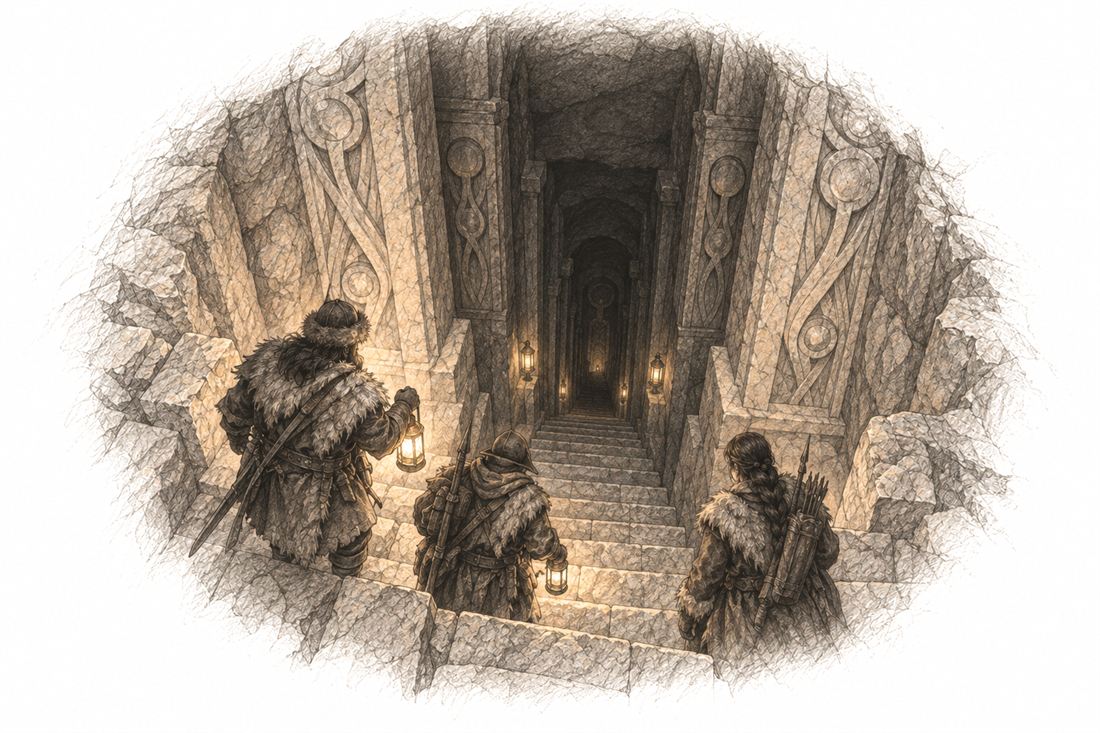
In one account, a company of excavators discovered a staircase descending beneath a mountain. They followed it for three days before returning, having found neither its beginning nor its end.
Another describes a hall without doors, its ceiling fashioned to resemble a night sky whose stars matched no constellation known to Scythia.
These accounts survive only in fragments, and their wonders may have grown with each retelling.
Yet the ruins themselves remain.
The scholars of the Rebirth studied them with fascination. Some believed they were the works of forgotten kingdoms. Others proposed that civilizations had risen and fallen long before the Age of Crowns, leaving behind only those things too stubborn for time to consume.
A few suggested that history was not a road leading ever forward, but a great wheel upon which the world rose, flourished, and fell.
Such ideas were debated in universities and council chambers, sometimes with more passion than courtesy.
But disagreement, in those days, was seldom regarded as treachery.
A question might be challenged without condemning the one who asked it.
And knowledge, however incomplete, was considered an inheritance belonging to all who sought it.
For a time, this belief seemed sufficient to guide the world.
IV The Measure of Prosperity
The Rebirth endured beyond the lifetimes of those who had first imagined it.
Generations were born into peace, and the memory of the old wars faded into history.
The children of merchants became scholars. The descendants of soldiers became architects. Families whose ancestors had fought across contested borders now shared businesses, friendships, and homes.
It was a magnificent achievement.
But prosperity, like power, has a way of concealing its own cost.
The cities required timber, stone, metals, and fertile land. Their workshops consumed resources faster than distant provinces could replenish them. Their growing populations demanded new roads, new settlements, and new fields.
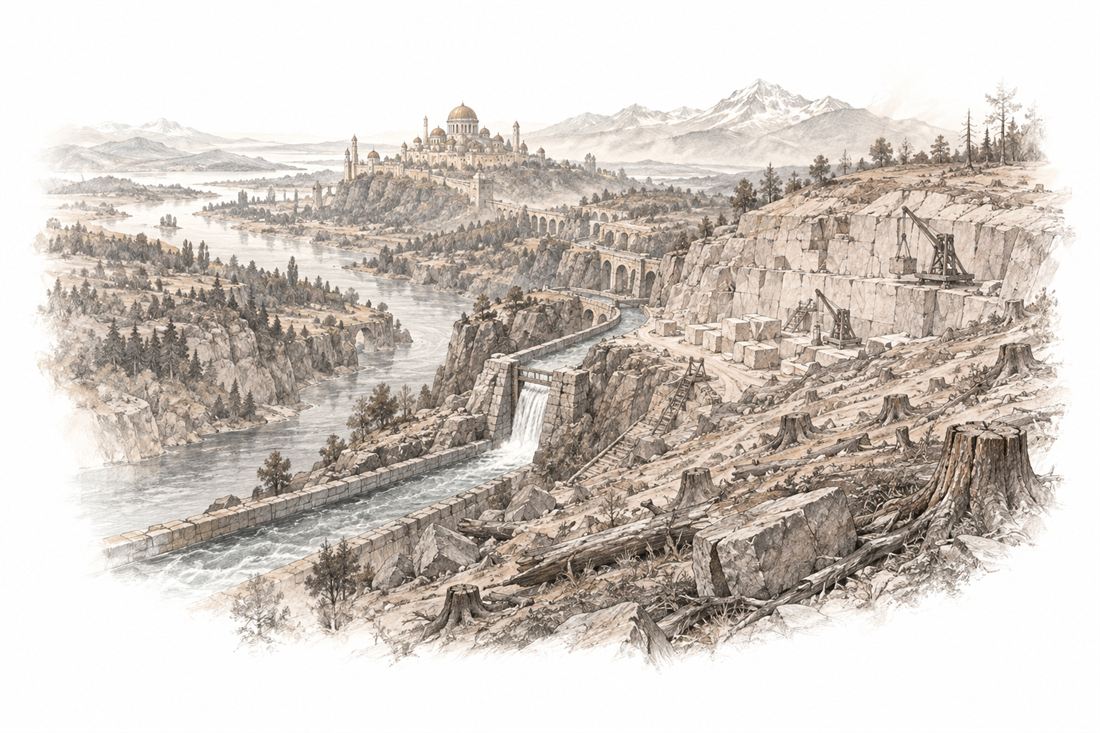
Forests retreated before the axes of men. Rivers were redirected. Mountains were opened, their wealth carried away to cities that seldom witnessed the labor of its extraction.
To many, these changes were signs of progress.
A forest cleared might become a village. A mountain quarried might provide stone for a hospital. A river harnessed might feed ten thousand people who would otherwise go hungry.
Were these not worthy accomplishments?
Yet others looked upon the same works and wondered what had been lost.
A valley flooded to sustain a distant city could never again shelter the families who had lived there. A forest felled in a generation might require centuries to return, if it returned at all.
And the benefits of prosperity were not shared equally.
Those who enjoyed the warmth of great halls seldom felt the cold of the mines beneath them.
At first, such concerns were raised as questions of stewardship, fairness, and obligation.
They were discussed openly, as so many questions had been before.
What did civilization owe the world that sustained it?
Did the right to build imply the right to consume?
And if the prosperity of the present diminished the inheritance of generations yet unborn, could it truly be called progress?
There were no easy answers.
Nor, in the beginning, was there any reason to believe that answers must divide the world.
The wisest among them understood that civilization required both the courage to change and the wisdom to preserve.
But wisdom is seldom the loudest voice in a crowded chamber.
And as the centuries passed, the questions grew more urgent.
V The First Fractures
No single disagreement ended the Rebirth.
Its passing was as gradual as its beginning.
Councils once devoted to the sharing of knowledge became arenas in which kingdoms defended competing interests. Agreements negotiated in good faith were challenged by those who had not been present to make them.
Some argued that the prosperity of Scythia depended upon continued expansion, that to halt its advancement was to condemn future generations to hardship.
Others warned that prosperity without restraint would leave those same generations a diminished world.
Both spoke of duty.
Both spoke of the future.
And both increasingly came to believe that the other endangered it.
At first, these divisions remained matters of scholarship and policy. Debate was vigorous, but compromise still possible.
Then came the voices that found advantage in disagreement.
A failed harvest could be blamed upon those who opposed the clearing of new lands. A poisoned river became proof of the recklessness of those who demanded greater industry.
Every misfortune acquired an explanation. Every explanation required someone to bear the blame.
Old loyalties stirred beneath new convictions.
The kingdoms that had spent centuries learning to cooperate began once more to measure their neighbors by the distance between their beliefs.
Still, the great cities stood.
Their markets flourished. Their libraries remained open. Children played beneath monuments raised by generations of peaceful labor.
The world had not yet broken.
Indeed, many believed it could not.
They had inherited a civilization so magnificent that its endurance seemed a law of nature.
They mistook the length of their peace for a promise of its permanence.
And in the halls where the future of Scythia was debated, a dangerous conviction began to take root:
That those who disagreed were no longer merely mistaken.
They were obstacles to be overcome.
Philosophical differences were no longer treated as obstacles to be overcome through patience and reason. They became affronts to fundamental beliefs, and disagreement itself was recast as an attack.
Thus ended the Rebirth, not in a burning flame, but as a smoldering ember.
The belief that a world shared could be greater than a world possessed.
The kingdoms had learned to lay down their swords.
They had yet to learn how to lay down their certainty.