
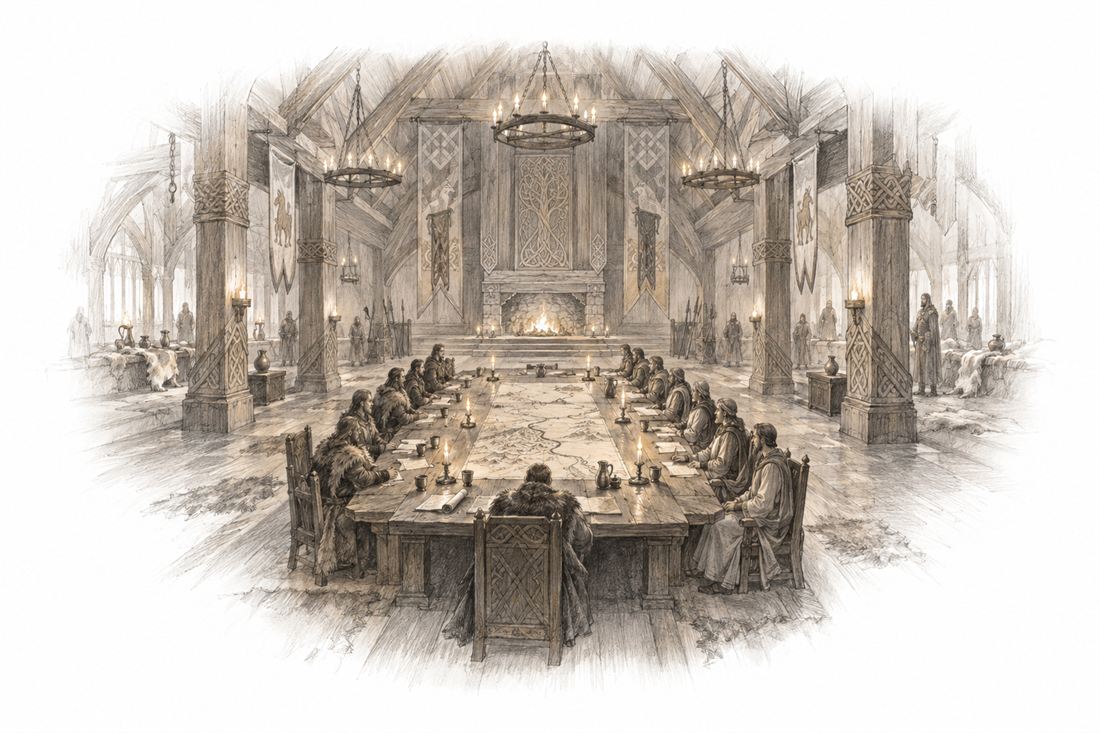
There are generations remembered for the wars they fought, and others for the kingdoms they raised.
The generation that gave Scythia the Long Concord is remembered for something less easily celebrated.
It chose restraint.
After centuries of reconstruction, the kingdoms had recovered much of their strength. Their cities prospered, their merchants traveled freely, and the wilderness that had once divided distant peoples was slowly yielding to settlement and trade.
Yet prosperity brought familiar questions.
How far should civilization extend? What lands might rightfully be claimed? What obligations did the living owe to those who would inherit the world after them?
These were not new concerns. Fragments of ancient scholarship suggested that similar questions had troubled the peoples of Scythia long before the Sundering.
But the surviving histories offered little guidance.
The kingdoms knew what had been lost.
They did not know how to prevent its loss again.
I The Two Allegiances
The first gatherings were held not in royal courts, but in the halls of merchants, scholars, and provincial councils.
There were disputes over mining rights, forests, waterways, and the expansion of settlements into lands whose inhabitants had never acknowledged the authority of distant kings.
Some believed the kingdoms had grown too cautious. That their fear of repeating the past had become an excuse for refusing the future.
Others feared that prosperity was once again being purchased through the destruction of things that could never be restored.
From these disagreements emerged two great political institutions.
The Vanguard Allegiance, known as the Vanguard, gathered those who believed that civilization must continue to advance. Its supporters championed industry, exploration, commerce, and the improvement of life through ingenuity and common endeavor.
The Aegis Alliance, known as the Aegis, united those who believed prosperity carried an obligation to protect the world's inheritance. Its supporters defended the autonomy of communities, the preservation of ancient places, and the stewardship of lands no kingdom could rightfully claim as its own.
Neither allegiance was founded to destroy the other.
Indeed, their earliest representatives understood something their descendants would sometimes struggle to remember.
They needed one another.
The Vanguard could raise a city, but the Aegis might preserve the watershed upon which it depended.
The Aegis could protect a forest, but the Vanguard might build the roads that allowed its neighboring villages to survive a bitter winter.
They disagreed about what the world required.
They agreed that it was worth saving.
II The Art of Compromise
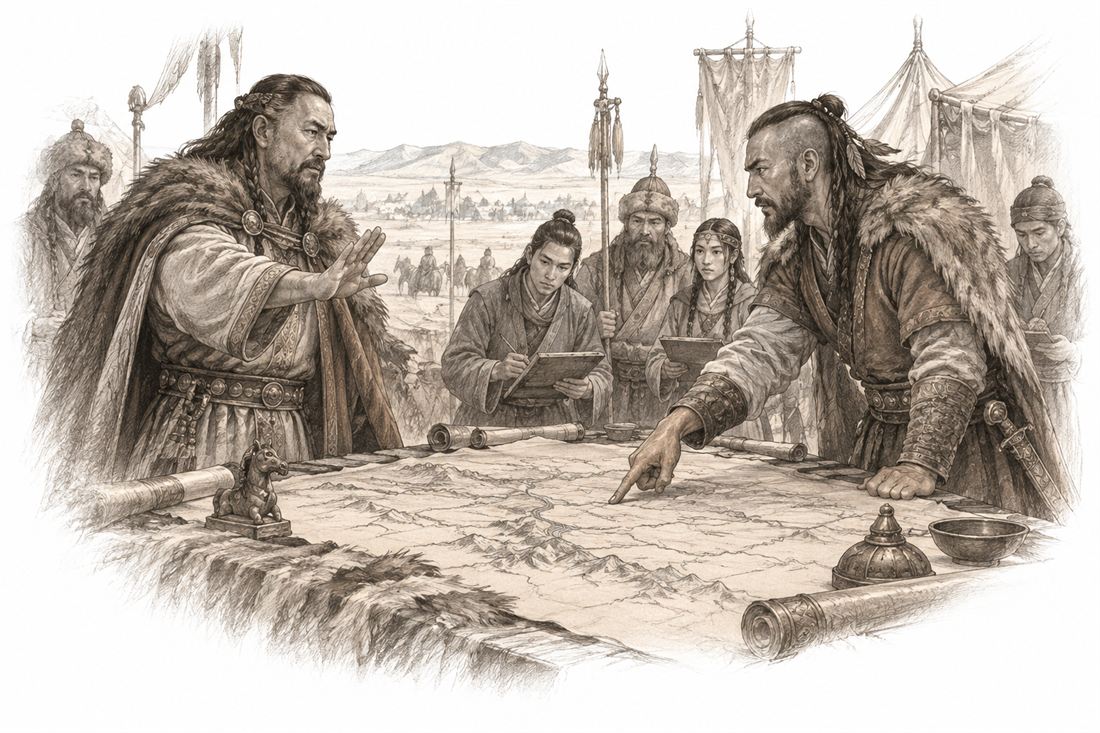
The first great agreements were neither elegant nor universally welcomed.
Their terms were debated for months. Delegates threatened to withdraw. Kings protested limitations upon their authority, while provincial councils refused concessions that might diminish their independence.
Yet the negotiations continued.
Certain lands were placed under shared protection. Trade corridors were established through disputed territories. New settlements were permitted under agreements that required the preservation of surrounding resources.
There were failures.
A treaty might collapse when a newly discovered vein of ore tempted a ruler to disregard its provisions. A protected valley might suffer from neglect because no council could agree upon who bore responsibility for its care.
But the failures did not bring an end to diplomacy.
Instead, they became reasons to negotiate again.
And slowly, the agreements acquired a strength that no army could have given them.
They became ordinary.
A merchant no longer questioned whether a caravan might cross a disputed border. A farmer could petition a distant council without first pledging allegiance to its rulers. Craftsmen found customers in cities whose leaders held convictions entirely unlike their own.
The Vanguard and Aegis remained distinct.
Their disagreements were frequent, occasionally bitter, and sometimes impossible to resolve.
Yet for decades, they returned to the same tables.
This was the achievement of the Long Concord.
Not that the peoples of Scythia had learned to agree.
But that they had learned to disagree without destroying one another.
III The Children of Peace
A generation passed.
Then another.
The children born beneath the Concord inherited a world their grandparents had scarcely dared to imagine.
They knew prosperous markets, open roads, and cities whose gates welcomed travelers from distant kingdoms. Their families traded across political boundaries, and friendships formed without regard for the allegiances of kings.
Some grew to become soldiers, others merchants, scholars, healers, or craftsmen.
Many never declared themselves to either great alliance.
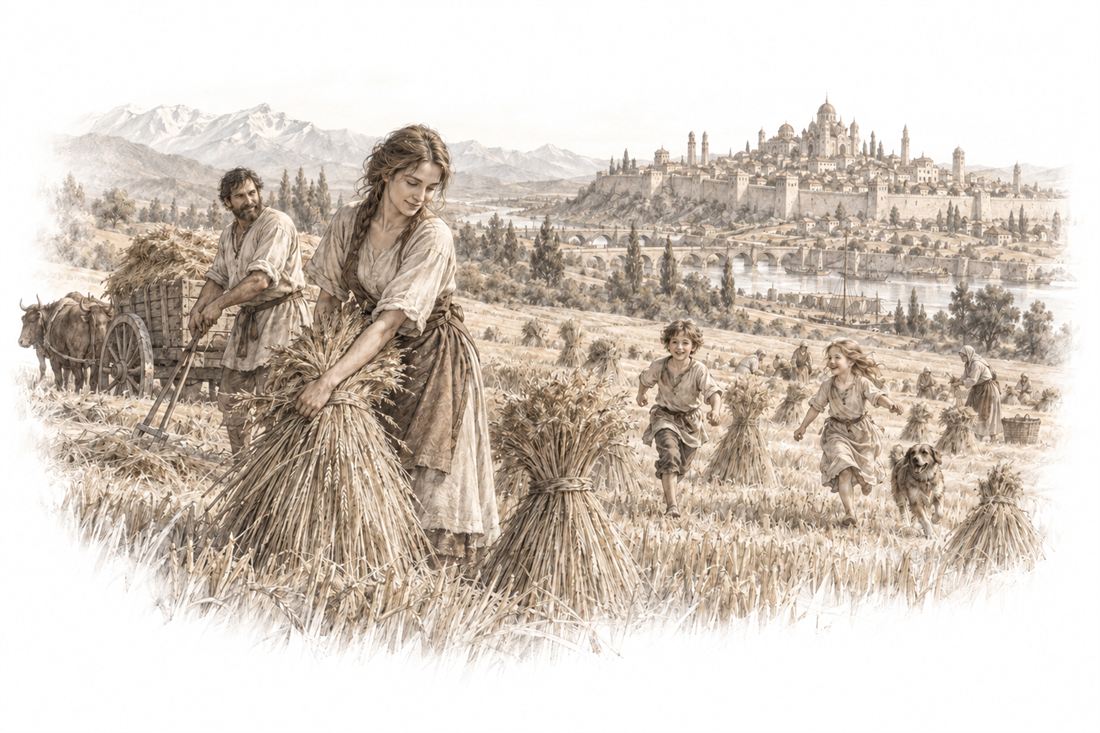
They had fields to tend, workshops to maintain, children to raise, and lives whose meaning was not measured by the fortunes of distant councils.
It was an ordinary existence.
And therein lay the Concord's greatest triumph.
Peace had ceased to be a remarkable achievement and had become the expectation of daily life.
But what is inherited without struggle is not always understood.
The treaties that had once demanded extraordinary patience came to be regarded as burdensome relics. The concessions that had prevented bloodshed were remembered by some as humiliations.
New leaders rose who had never witnessed the cost of a broken peace.
They inherited the institutions of compromise, but not always the humility that had made them possible.
And among them were those who saw opportunity in the grievances their predecessors had worked so carefully to settle.
IV The Stirring of Embers
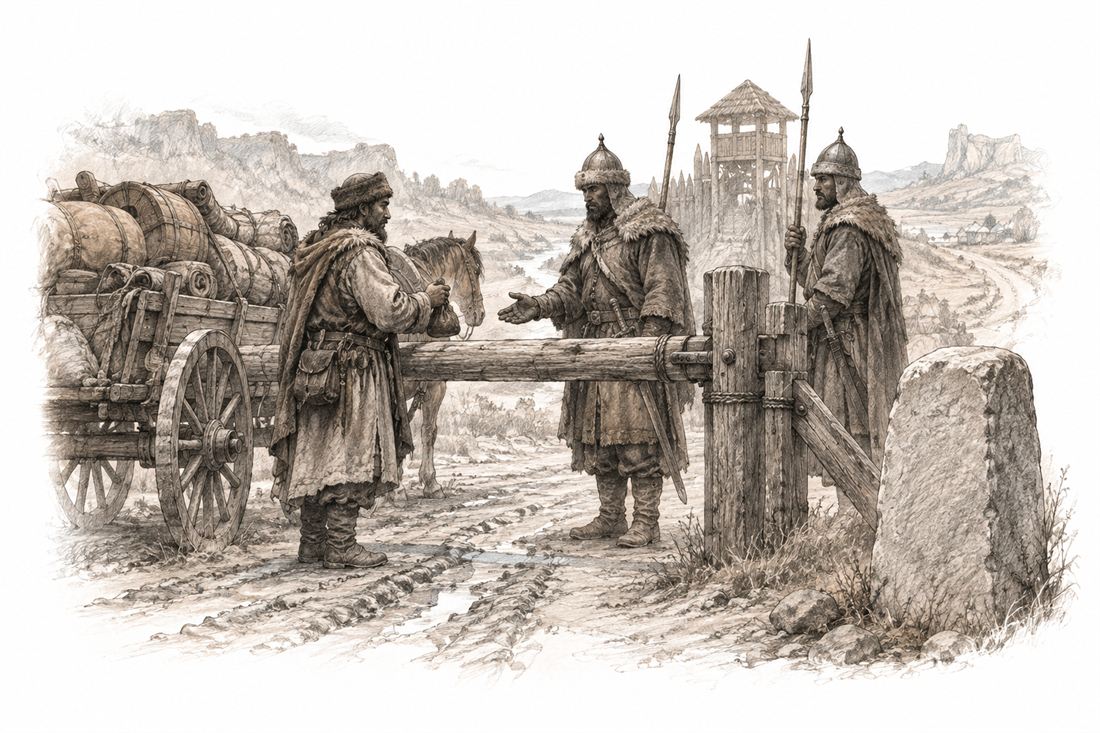
The changes were subtle at first.
A disputed boundary. A tariff imposed upon a neighboring kingdom. An expedition granted permission to enter lands long held under mutual protection.
Each incident could be explained.
Each grievance could be defended.
But the language of the councils began to change.
Those who sought compromise were accused of surrendering principle. Those who urged restraint were told that their caution endangered the future.
The Vanguard's most ambitious voices spoke of opportunities denied by generations of hesitation.
Within the Aegis, others warned that every concession had brought the world closer to the mistakes of antiquity.
Neither movement spoke with a single voice.
There remained those who sought cooperation, who remembered the purpose of the Concord and believed its promises worth defending.
Yet their arguments found themselves competing with simpler ones.
Fear required fewer words than understanding.
Anger demanded less patience than reason.
And certainty, once embraced, offered the comforting assurance that compromise was no longer necessary.
Still, the kingdoms remained at peace.
Their citizens continued to trade. Their families continued to gather. The roads remained open, and the fields were tended.
But beneath the ordinary rhythms of life, the old convictions were acquiring a sharper edge.
The world had not yet chosen conflict.
It had merely begun to imagine that conflict might be justified.
V What the Future Holds
For seventy-five years, the peoples of Scythia have lived beneath a peace maintained not by the absence of disagreement, but by the willingness to compromise.
The Vanguard looked toward what might be built. The Aegis sought to protect what must not be lost.
Their convictions differed, yet their purpose was not so distant. Both sought a future worthy of those who would inherit it.
But generations pass, and with them, the wisdom of those who came before.
New kings sit upon old thrones. New voices fill the council chambers. Agreements once celebrated as triumphs are now condemned as concessions. Old grievances, long settled, are given new life.
The embers of discontent are stirred by kings and counsel.
And in their certainty, they have begun to forget the lessons of a world once shattered.
“History doesn't repeat itself because people forget what happened. It repeats because people convince themselves that this time, they're right.”
And so, as the kingdoms look toward an uncertain future, one question remains.
Has the Long Concord come to an end?