
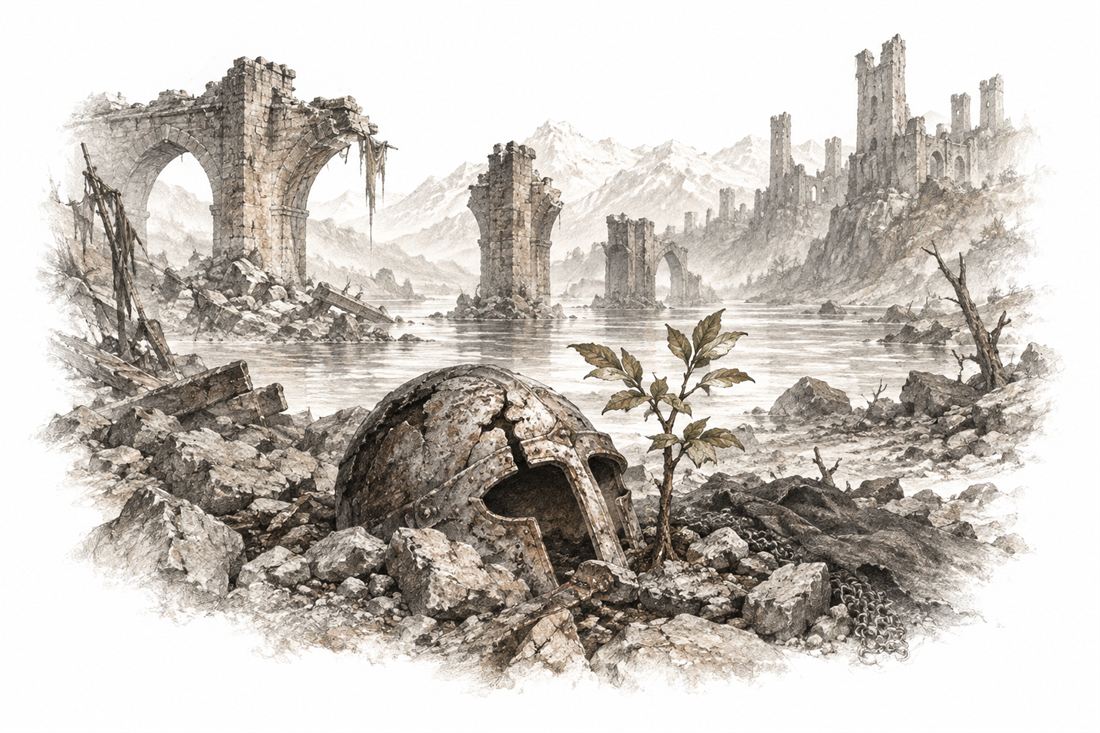
There was no morning upon which the peoples of Scythia awoke and found themselves divided.
The markets opened as they always had. Ships entered the harbors, laden with timber, grain, and precious metals. Children hurried through streets beneath the shadows of monuments raised by generations who had known nothing but peace.
The great libraries remained open. The observatories still measured the heavens. In the council chambers of the kingdoms, learned men and women continued to speak of prosperity, duty, and the future.
Yet something had changed.
A neighbor's convictions had become cause for suspicion. A question, once welcomed, was now received as an accusation. Words that had served for centuries as instruments of understanding were sharpened into weapons.
The people of Scythia had not forgotten how to speak.
They had forgotten how to listen.
And beneath the magnificent achievements of the Rebirth, the foundations of their civilization began to fracture.
I The Fracturing of Reason
The earliest divisions were not without cause.
There were valleys stripped of their forests, rivers fouled by industry, and communities displaced to satisfy the appetites of distant cities. There were also hungry provinces awaiting new farmland, settlements dependent upon the labor of miners, and families whose prosperity had been made possible by the very works others condemned.
Neither grievance was imagined.
Neither could be answered by denying the other.
For generations, the kingdoms had sought compromise through councils and treaties. Now those institutions found themselves increasingly burdened by demands that admitted no concession.
A proposal to restrict the harvesting of ancient forests was denounced as an assault upon the livelihoods of thousands. A plan to expand a mountain quarry was condemned as the deliberate destruction of a people's inheritance.
In quieter chambers, practical solutions were still discussed.
But the quiet chambers held little influence over the crowds.
Those who spoke with certainty attracted followers. Those who acknowledged complexity were accused of cowardice. Leaders who had once earned respect through negotiation discovered that anger could command devotion more swiftly.
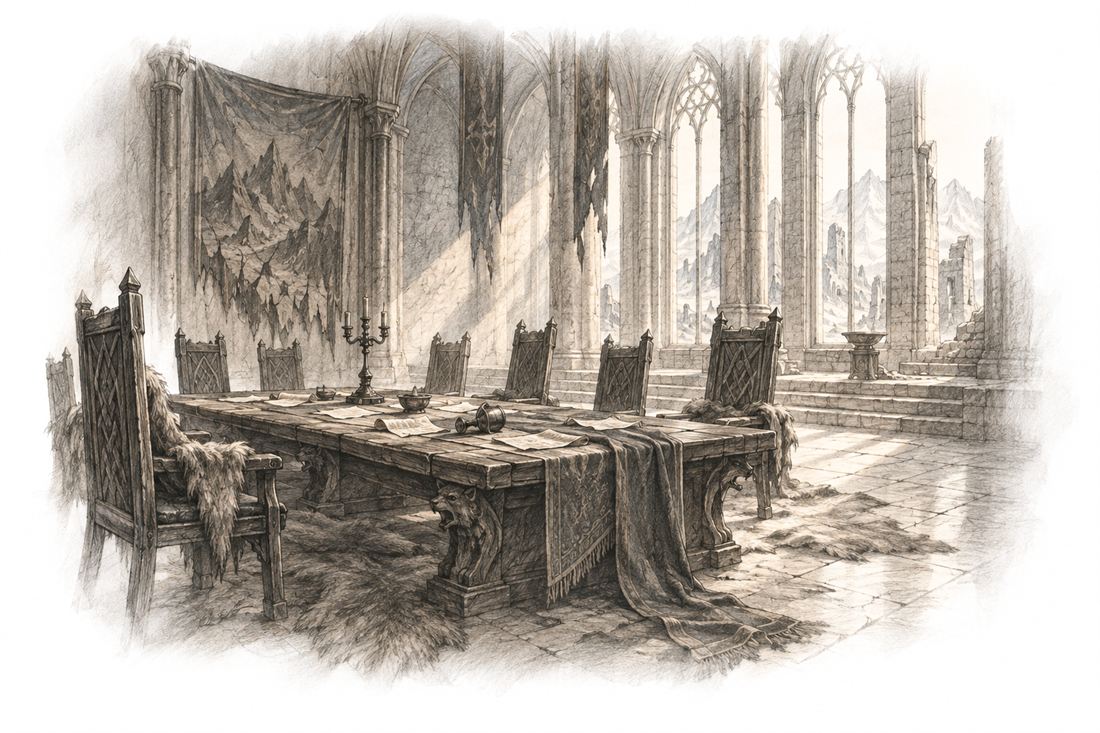
The first great councils to dissolve did so without violence.
Delegates departed. Agreements expired. Empty chairs gathered dust beneath painted ceilings.
No one imagined these small departures would one day be counted among the beginnings of a catastrophe.
II The Keepers of Grievance
In the years that followed, the histories themselves became contested ground.
Old treaties were examined for evidence of betrayal. Ancient victories were celebrated anew, while defeats long reconciled were offered as proof of enduring injustice.
Scholars who challenged these accounts found their patronage withdrawn. Chroniclers were encouraged to omit inconvenient passages. In some kingdoms, books were forbidden; in others, they were rewritten.
The past became a possession to be defended rather than an inheritance to be understood.
And still, the great cities prospered.
There were festivals, marriages, and seasons of abundant harvest. Merchants continued to cross borders, though their journeys grew more difficult. Families divided by conviction still gathered around the same tables, even as conversation became a thing to fear.
Not every ruler welcomed the growing hostility.
Some exhausted their fortunes attempting to preserve the old agreements. Others risked their crowns by refusing demands for retaliation.
But moderation carried a peculiar burden. It required its advocates to answer for every imperfection of the peace, while those who promised its destruction needed only to describe the glory that would follow.
Among the ambitious, this was a lesson quickly learned.
They spoke of stolen futures and ancestral humiliations. They promised security through strength, justice through victory, and prosperity through the defeat of those who stood in its way.
And when their promises failed to satisfy, they offered a simpler explanation.
Someone else was to blame.
III The Wars of Conviction
The first bloodshed came far from the great capitals.
A disputed settlement. A contested river. A procession interrupted by those who believed its banners an insult.
The surviving accounts disagree upon the particulars.
Each names the other as aggressor.
What followed is better attested.
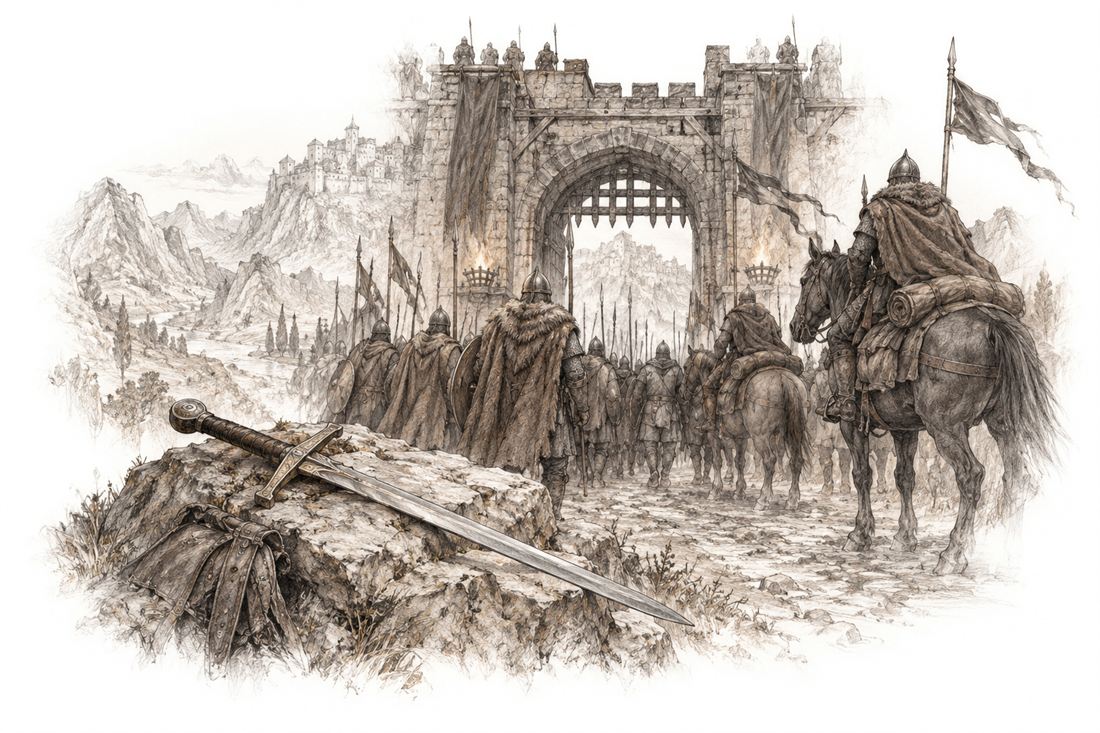
Militias gathered. Garrisons were reinforced. Roads once maintained for commerce were fortified against invasion. Kingdoms that had shared knowledge for centuries began concealing their discoveries from one another.
The great works of the Rebirth acquired new purposes.
Observatories became watchtowers. Foundries that had fashioned tools for farmers produced weapons for armies. Scholars who had devoted their lives to understanding the hidden properties of the world were commanded to turn that understanding toward the defeat of their neighbors.
Not all obeyed.
Some fled. Some destroyed their research. Others persuaded themselves that their work might shorten the coming wars, and thereby spare lives that would otherwise be lost.
There is little evidence that such hopes were fulfilled.
The conflicts spread unevenly. Certain kingdoms remained at peace for decades while others endured siege and famine. Alliances shifted. Old enemies found common cause, and former friends discovered reasons to betray one another.
It was not a war between two peoples, nor a struggle in which every participant held the same conviction.
It was a succession of wars, each fed by the injuries of those before it.
And as the generations passed, the original questions of stewardship and prosperity became almost unrecognizable beneath the weight of accumulated vengeance.
The sword had returned.
This time, its wielders believed they fought not merely for territory, but for the rightful future of the world.
IV The Sundering
Of the final years, little can be stated with certainty.
The chronicles become fragmented. Dates contradict one another. Accounts of entire kingdoms cease without explanation.
Some surviving texts speak of great engines raised beneath the mountains. Others describe workings of magic whose names have no meaning in the languages of the present.
There are stories of a light that shone beneath the earth, of seas withdrawing from their shores, and of bells ringing in cities where no living hand remained to pull their ropes.
Whether these accounts describe the same calamity, or several calamities remembered as one, is unknown.
What is certain is that the world was changed.
Mountains broke. Rivers abandoned their courses. Forests vanished beneath ash and stone. Lands once joined were divided, while distant shores were thrust into unfamiliar company.
Cities that had endured for centuries disappeared.
In some places, their ruins remained, broken but recognizable. Elsewhere, nothing survived to mark where streets had stood or where generations had lived and died.
The greatest libraries of the Rebirth were lost. Their collections burned, drowned, or buried beneath the wreckage of the civilization that had assembled them.
The rivers that once nourished the great cities ran black with ink and red with blood.
The knowledge of ages vanished with those who had possessed it.
No surviving account establishes who first unleashed the forces responsible.
Indeed, none establishes beyond dispute that they were unleashed by mortal hands at all.
The peoples who survived gave the catastrophe many names.
Only one would endure across the centuries.
The Sundering.
V What Remained
In the aftermath, there were no victors.
The crowns of the old kingdoms had little meaning where kingdoms no longer existed. Borders were erased. Armies scattered. Those who had once commanded thousands found themselves searching the ruins for water and shelter.
The distinctions that had divided the world did not disappear.
But hunger demanded more immediate answers than philosophy.
Strangers shared fires. Enemies carried one another from the wreckage. In places where cities had fallen, survivors gathered beneath whatever walls still stood and began the terrible work of counting the living.
There were acts of extraordinary courage.
There were cruelties also.
Desperation did not make all people noble, nor did suffering render every heart compassionate.
Yet among the scattered remnants of Scythia, life endured.
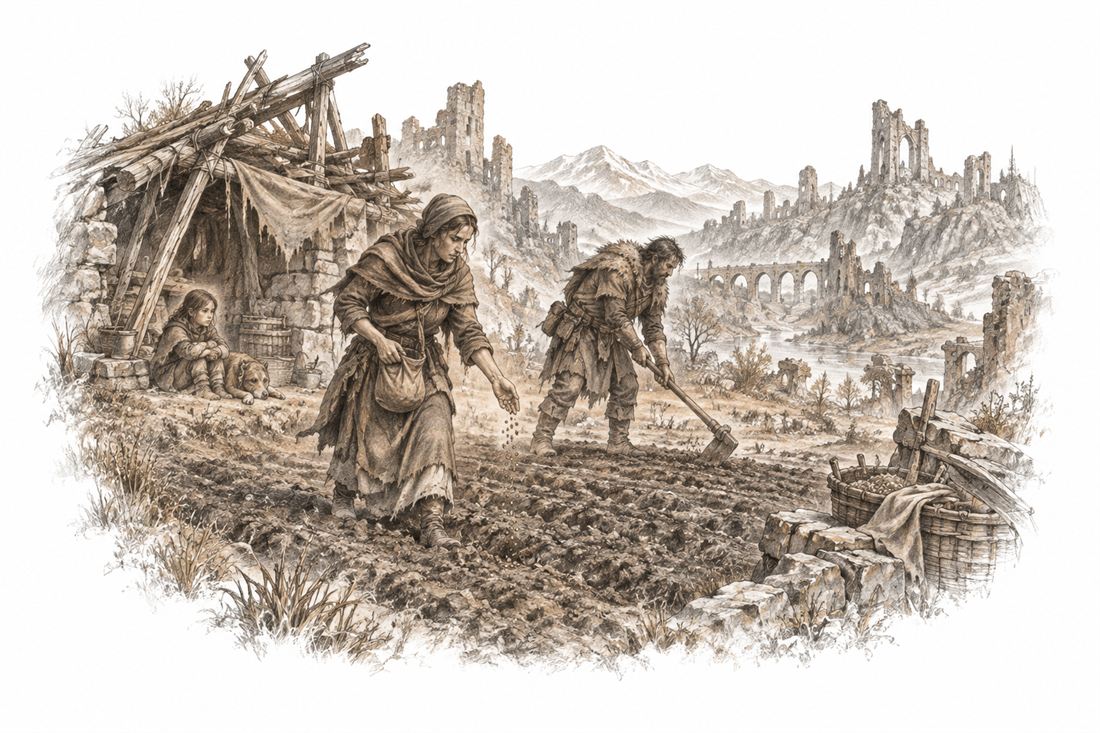
Seeds were planted in unfamiliar soil. Children were born beneath roofs raised from broken timber. The names of the dead were spoken aloud so that someone, somewhere, might remember them.
As years became generations, the survivors told their descendants what they believed had happened.
Their children repeated those stories.
Their grandchildren altered them.
And with every telling, the distance between memory and truth grew wider.
Those who had once sought dominion over the world were gone. Their magnificent cities lay silent, their arguments unanswered, their monuments broken beneath the weight of time.
But their convictions survived in fragments.
One people remembered the catastrophe as punishment for unrestrained ambition. Another recalled it as the consequence of those who had opposed necessary progress. Still others believed that the gods themselves had turned away from Scythia.
Each account preserved something.
Each forgot something else.
And beneath the earth, the remnants of the old world waited, indifferent to the stories told above them.
The Sundering had brought an end to the civilization of the Rebirth.
It had not brought an end to Scythia.
For the living, there remained the simplest and most difficult of obligations.
To endure.