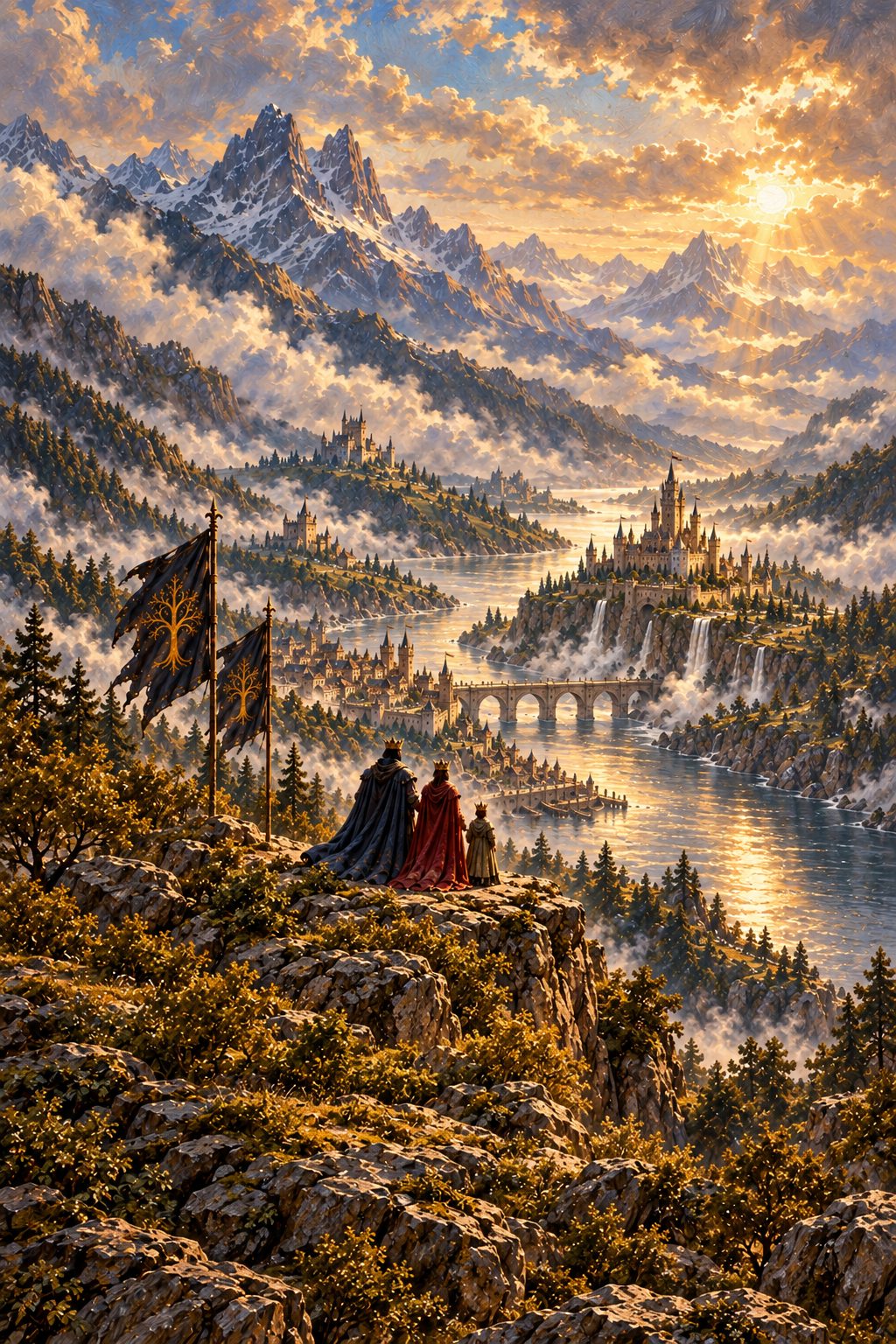
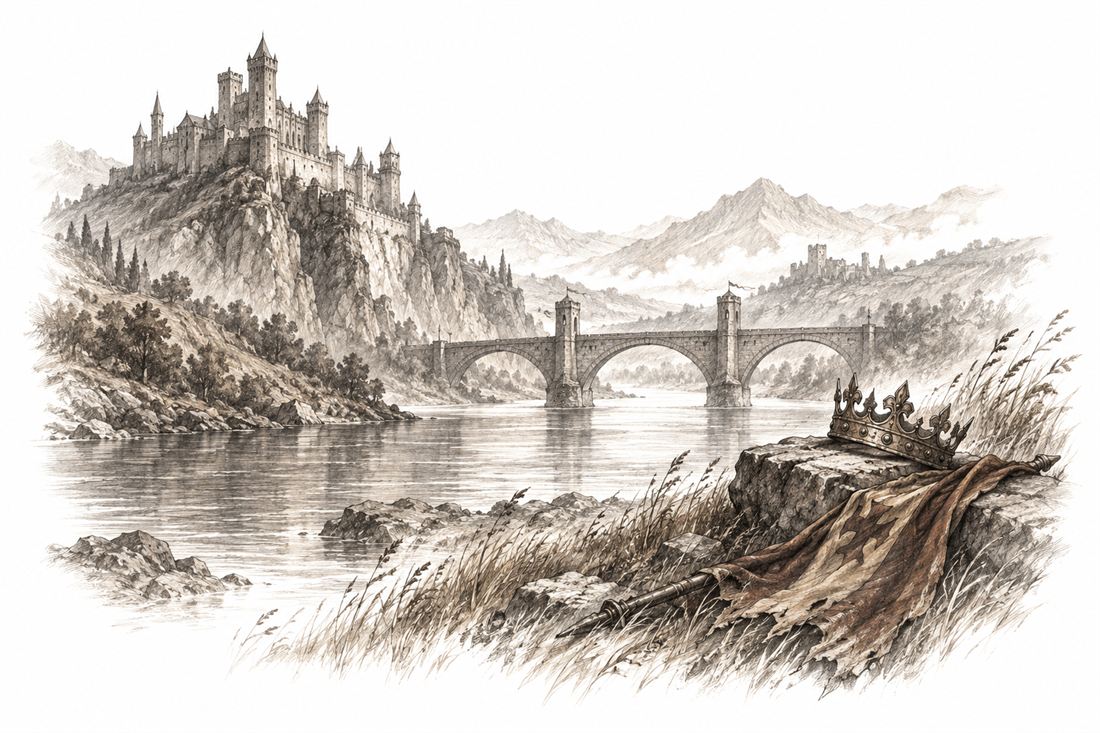
No living soul remembers the first king.
His name has vanished, as has the kingdom over which he held dominion. No monument bears his likeness. No surviving chronicle records his victories. If he was beloved, his people have forgotten their affection. If he was cruel, time has granted him a mercy his subjects may never have known.
Yet somewhere, beneath the earth of Scythia, the stones of his halls may still remain.
Such is the nature of history. It preserves the deeds of the fortunate, the boasts of the powerful, and, on rare occasions, the truth.
What is known of the Age of Crowns comes chiefly from what its people left behind: foundations swallowed by forests, roads disappearing beneath mountain passes, broken weapons, and the weathered likenesses of rulers whose names have long since surrendered to the wind.
From these remnants, a history has been assembled.
Whether it is the history that truly happened is another matter.
I The First Kingdoms
Before the great cities, before the treaties and the boundaries drawn upon maps, there were settlements scattered across the valleys, forests, and plains of Scythia.
Their inhabitants were farmers, hunters, shepherds, and craftsmen. They built their homes beside rivers and sheltered their children beneath roofs of timber and thatch. Their concerns were simple enough: the coming winter, the failure of a harvest, the dangers beyond the firelight.
But even among these early peoples, the seeds of kingdoms had taken root.
A prosperous settlement attracted travelers. Travelers brought trade. Trade brought wealth, and wealth required protection.
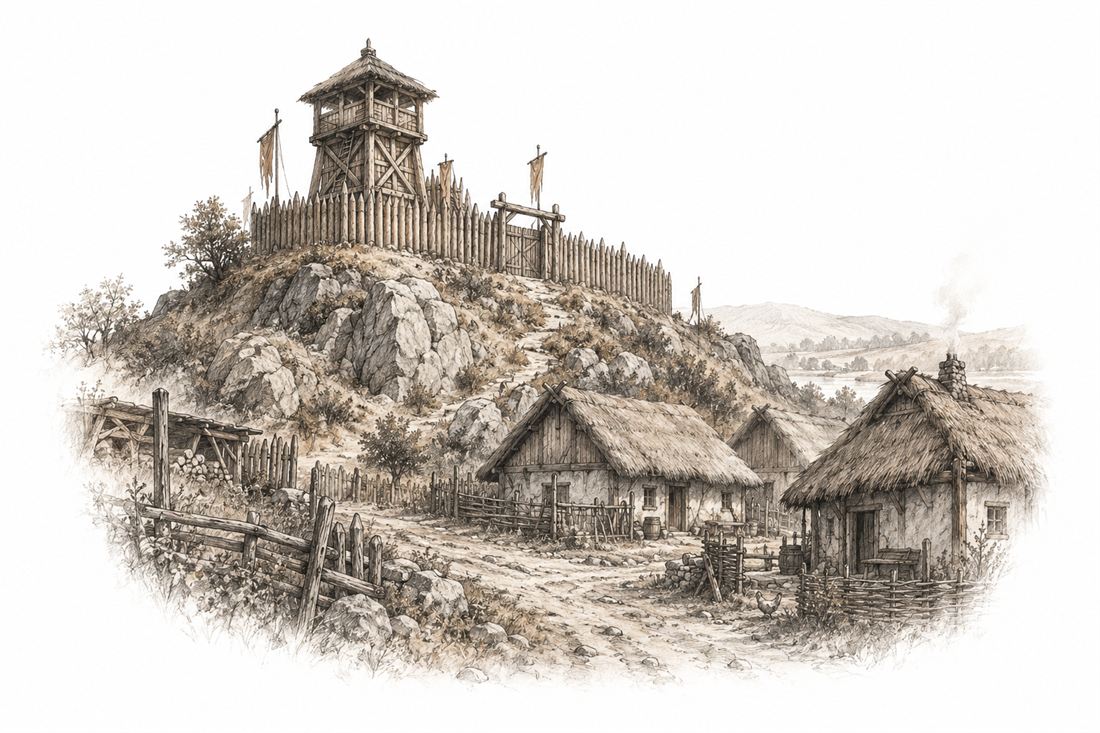
Walls rose around villages. Watchtowers appeared upon distant hills. Men and women entrusted their safety to those who could organize a defense, settle disputes, and command the loyalty of others.
Some leaders were chosen for their wisdom. Others earned their place through courage. Still others discovered that a sword could secure obedience more quickly than either.
In time, authority became inheritance.
A leader's children claimed the right to rule because their father had ruled before them. Families became houses, houses became dynasties, and the first crowns passed from one generation to the next.
The earliest kingdoms were small by the measure of those that followed. A ruler might command no more than a river valley and the settlements along its banks. Yet to those who lived within its borders, such a kingdom was the whole of the civilized world.
Beyond lay the lands of strangers.
And strangers, as history so often demonstrates, were easily mistaken for enemies.
II The Price of Dominion
No kingdom grew without consequence.
As settlements flourished, their needs multiplied. Forests were felled for timber. Hillsides were opened for stone and ore. Rivers were diverted to feed fields, mills, and growing cities.
The abundance of one land became the envy of another.
At first, disputes were settled through tribute, marriage, or the exchange of goods. But when negotiations failed, rulers discovered that armies could make demands where diplomats could only make requests.
The first wars were fought over grazing lands, fertile valleys, and the rights to rivers.
Later wars required less explanation.
A border crossed by an ancestor became a grievance inherited by descendants. A slight offered to one ruler became a debt demanded by another. Victories were celebrated in song, while defeats were preserved in silence, waiting for a generation willing to avenge them.
The kingdoms grew.
So too did their ambitions.
Across Scythia, fortresses crowned the hills. Roads were cut through wilderness to carry soldiers and supplies. Great halls rose behind walls of dressed stone, their chambers adorned with the trophies of distant campaigns.
There were rulers of remarkable vision among them. Some established laws that endured for centuries. Others encouraged learning, protected trade, or brought prosperity to lands long troubled by famine.
But even the most generous king could find reason to march upon a neighbor.
And even the cruelest could persuade himself that conquest was an act of necessity.
The people paid for these convictions.
Fields were burned before harvest. Villages were abandoned. Children inherited wars whose beginnings their grandparents could scarcely explain.
The surviving songs praise the courage of warriors and the magnificence of kings.
They speak less often of those who buried the dead.
III The Weight of a Crown
It would be a mistake, however, to remember the Age of Crowns only for its violence.
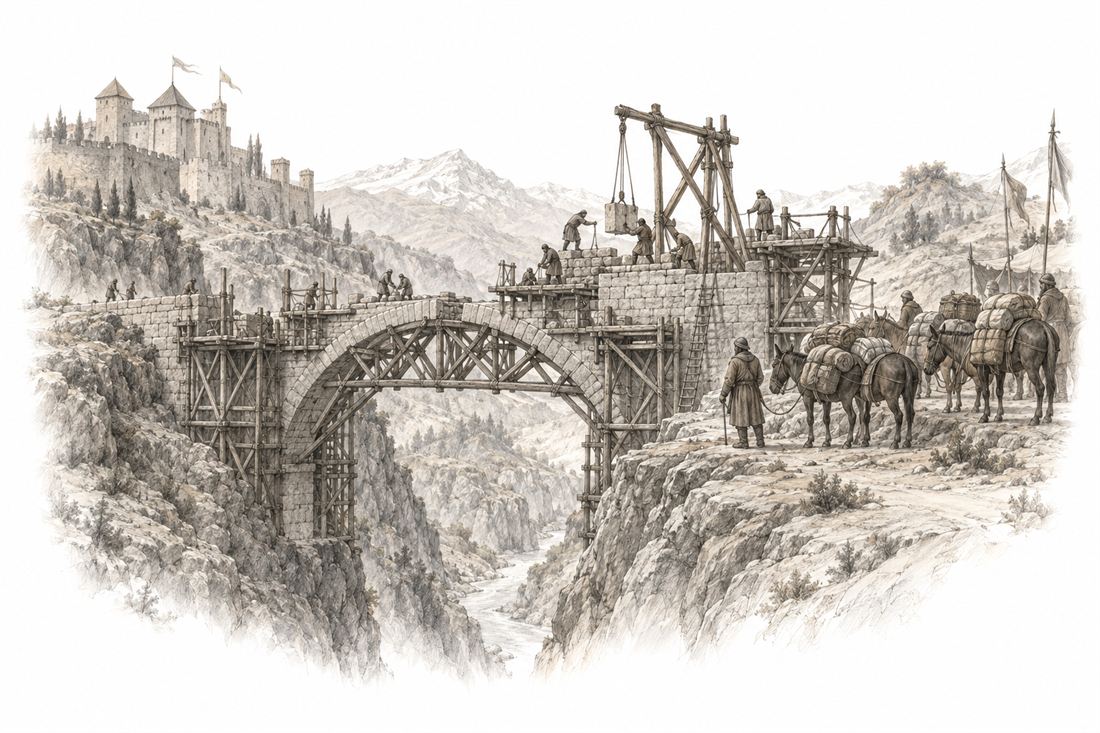
For every fortress raised against an enemy, there were bridges built to connect distant peoples. For every army that crossed a border, there were merchants who crossed it first.
Languages mingled in the marketplaces. Craftsmen exchanged techniques. Scholars traveled between courts, carrying books, instruments, and questions.
The kingdoms learned from one another even while their rulers struggled for dominion.
Some of the oldest surviving works of Scythian masonry belong to this period. Their builders understood the properties of stone with an ingenuity that later generations would struggle to reproduce. Fragments of intricate metalwork suggest traditions of craftsmanship far more sophisticated than the surviving records would lead us to expect.
And beneath the ruins of certain cities, excavators have uncovered foundations older still.
Who laid them remains unknown.
It is possible that the earliest kings built their thrones upon the remains of civilizations already forgotten. If so, they may have regarded those ancient stones with much the same wonder that modern scholars reserve for their own.
The world was old, even then.
Yet for all their achievements, the kingdoms remained prisoners of their rivalries.
Their wealth could not be secured without armies. Their armies required resources. Their resources demanded territory, and territory invited dispute.
A crown won through conquest was seldom worn in peace.
The greatest rulers eventually discovered that their victories had left them surrounded not by loyal neighbors, but by enemies awaiting their weakness.
A king might conquer a province in his youth, spend his middle years defending it, and die knowing his heirs would fight to keep it.
What had been gained?
The question was asked in many languages, in many courts, and across generations.
For a long time, it received no answer.
IV The Last Victories
The end of the Age of Crowns did not arrive with the fall of a single kingdom.
There was no final battlefield upon which the armies of Scythia laid down their weapons. No sovereign rose above all others to command a universal peace.
Rather, the age exhausted itself.
Centuries of conquest had produced kingdoms too vast to govern easily and borders too costly to defend. Trade had made former enemies dependent upon one another. The prosperity of distant cities increasingly mattered to rulers who had once cared only for their own.
A failed harvest in one kingdom could impoverish merchants in another. A war upon a distant frontier could close the roads upon which entire cities depended.
The world had become connected in ways its kings could neither undo nor fully control.
And slowly, an unfamiliar idea found its way into the councils of power.
Perhaps a neighbor's prosperity need not diminish one's own.
Perhaps strength could be measured by what a kingdom preserved rather than what it conquered.
Perhaps peace was not merely the interval between wars.
The idea was neither universally welcomed nor immediately understood.
There were those who called it weakness. Others dismissed it as the dream of scholars who had never stood upon a battlefield. Some rulers saw in cooperation only another means of securing advantage.
But there were also those who had buried sons and daughters, who had watched their cities rebuilt only to be destroyed again, and who had grown weary of victories that promised everything and settled nothing.
They began to listen.
Across the kingdoms, envoys traveled roads once reserved for marching armies. Old enemies sat together beneath unfamiliar banners. Agreements were proposed, rejected, amended, and proposed again.
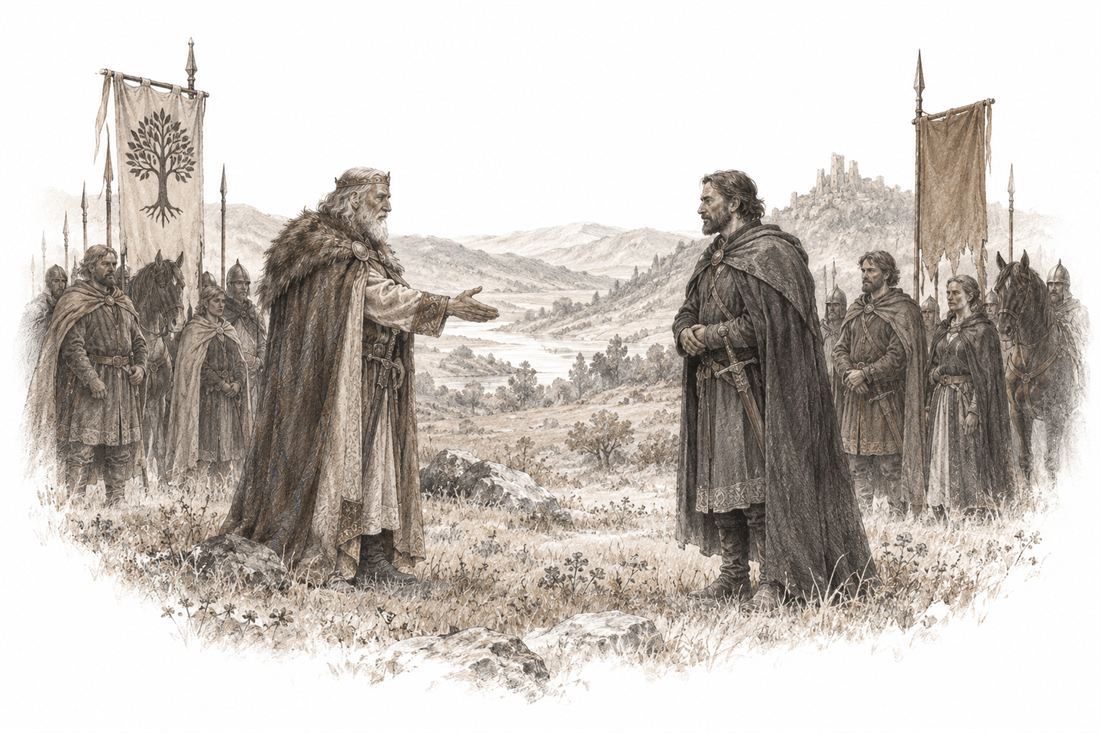
It was an uncertain beginning.
No one could have known what would follow.
For the first time in the remembered history of Scythia, its rulers began to consider not how the world might be divided among them, but what they might accomplish together.
And from that question would come a transformation greater than any conquest.
The crowns would remain.
But the world beneath them was about to be reborn.