The first generation after the Sundering built no monuments.
They had neither the strength nor the desire.
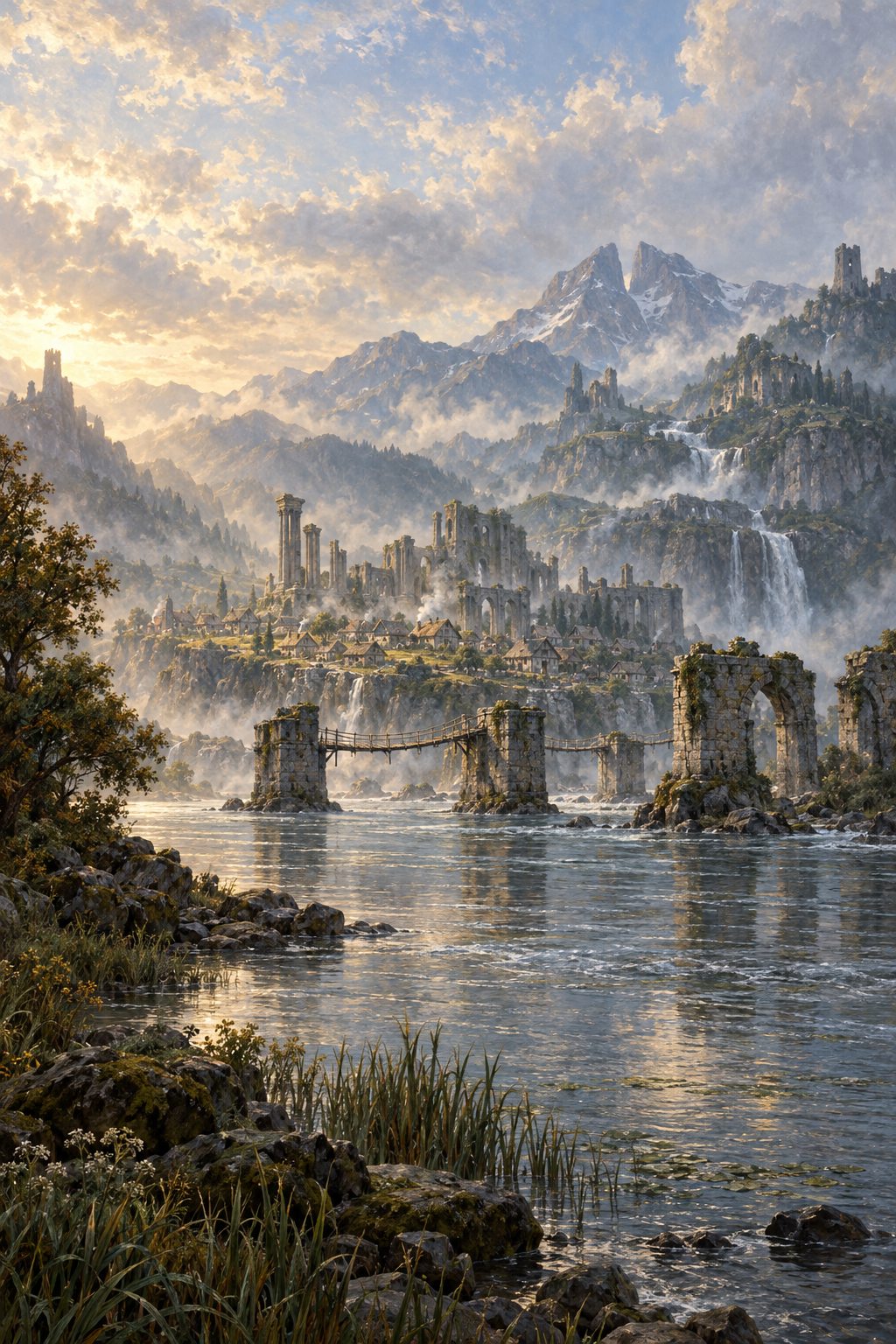
Where great cities had stood, there were fields of broken stone. Where rivers had nourished fertile valleys, there were empty beds and unfamiliar waters. Roads ended at precipices, bridges reached toward shores that no longer existed, and the proud towers of ancient kingdoms stood like gravestones above the ruins of their makers.
The survivors possessed little beyond what they could carry.
Some wandered for years, following rumors of unspoiled lands or settlements where bread might be found. Others remained among the wreckage, unwilling to abandon the places where their families had lived for generations.
There were no maps upon which they could depend.
No sovereign whose authority extended beyond the reach of his voice.
And no certainty that the world had finished breaking.
Yet morning followed morning.
The sun rose upon the ruins, indifferent to their sorrow, and beneath its light the living began again.
I The Gathering of Stones
The earliest settlements were built from what remained.
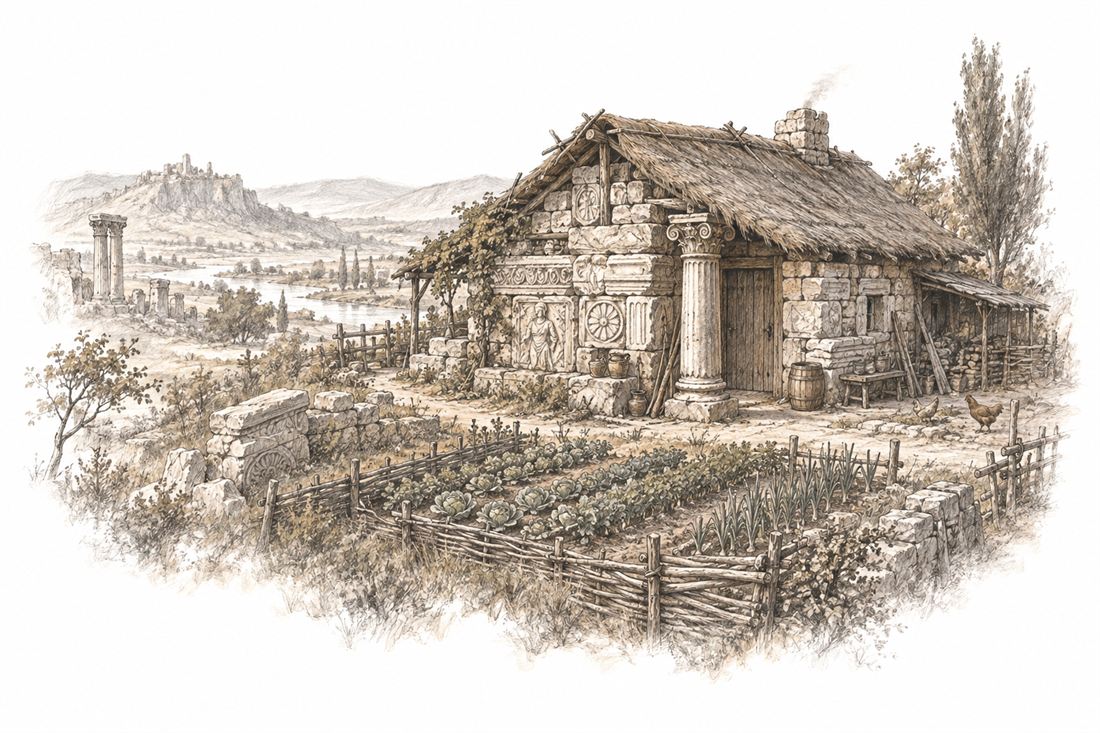
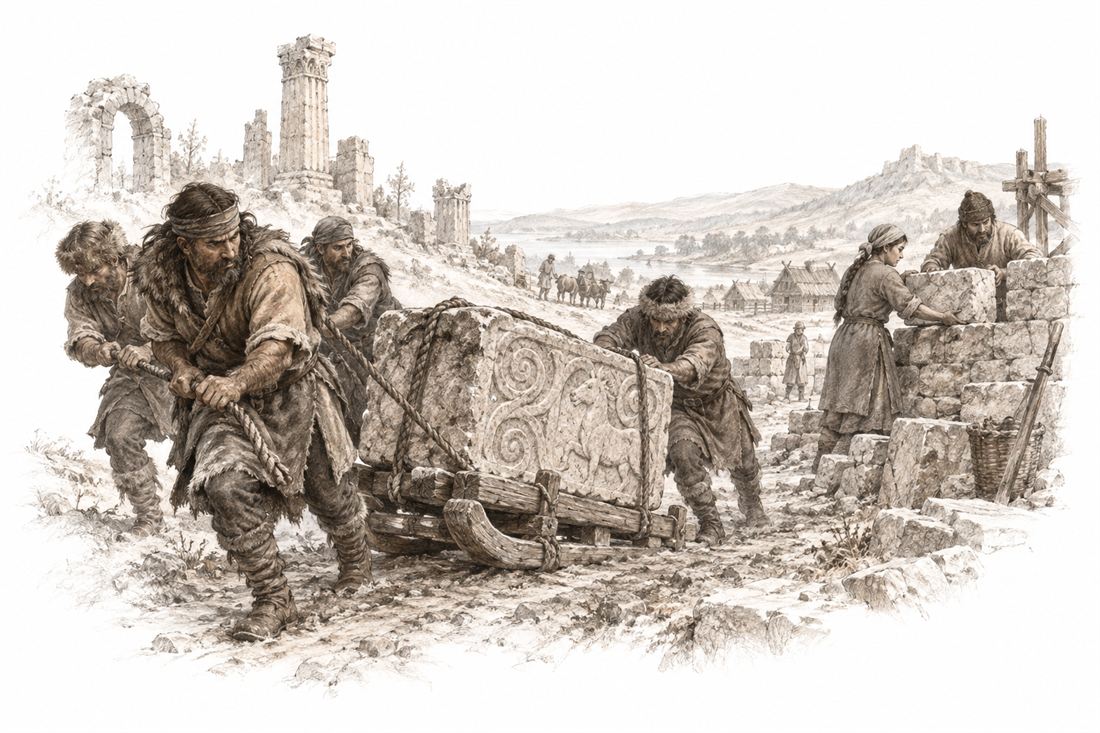
Stones once carved for palaces became the walls of humble dwellings. Timber was salvaged from fallen halls. Great avenues, cleared of their rubble, served as marketplaces where strangers exchanged whatever they could spare.
A farmer might trade seed for a mason's labor. A healer might offer her knowledge in return for shelter. Those who possessed tools guarded them as treasures, for the workshops that had fashioned such things were gone.
There were few distinctions of rank that hunger could not overcome.
The descendant of a king might labor beside the child of a servant, neither knowing the other's ancestry, nor caring greatly if he did.
In some settlements, councils arose from necessity. Their members were chosen not for noble birth, but because they knew how to organize a harvest, settle a quarrel, or keep a winter's provisions from spoiling.
Elsewhere, those with weapons claimed authority over those without.
The old ambitions had not perished with the old world.
There were raiders who preyed upon the helpless, rulers who demanded tribute from starving villages, and those who hoarded what might have saved their neighbors.
But there were others.
Men and women who crossed dangerous lands carrying medicine. Builders who raised bridges for communities they would never call their own. Teachers who gathered children beneath damaged roofs and taught them letters copied from books whose authors had been dead for centuries.
Their names are seldom found in the histories.
Their works are everywhere.
II The Fading of Memory
In the first years, there were those who remembered.
They spoke of cities whose towers had touched the clouds, of libraries vast enough to lose oneself within, and of wondrous instruments whose purposes had once been understood by ordinary craftsmen.
Their children listened.
But memory is a fragile vessel.
A scholar might preserve the words of an ancient treatise without possessing the knowledge needed to interpret it. A craftsman might remember the motions of his trade but lack the materials upon which it depended.
The arts of the Rebirth had rested upon generations of shared learning. When the institutions that sustained them vanished, even the simplest achievements became difficult to reproduce.
A surviving manuscript might describe a magnificent engine.
It could not teach a ruined kingdom how to rebuild the thousand workshops required to make one.
As decades passed, the witnesses died.
Their children inherited the stories, but not the world that had given them meaning.
And their grandchildren inherited the stories of stories.
The great libraries became legends. The old kingdoms acquired new names. Places once familiar to every traveler were remembered only in songs whose words changed with the passing centuries.
Some communities preserved fragments of the ancient languages. Others devised new scripts or abandoned writing altogether.
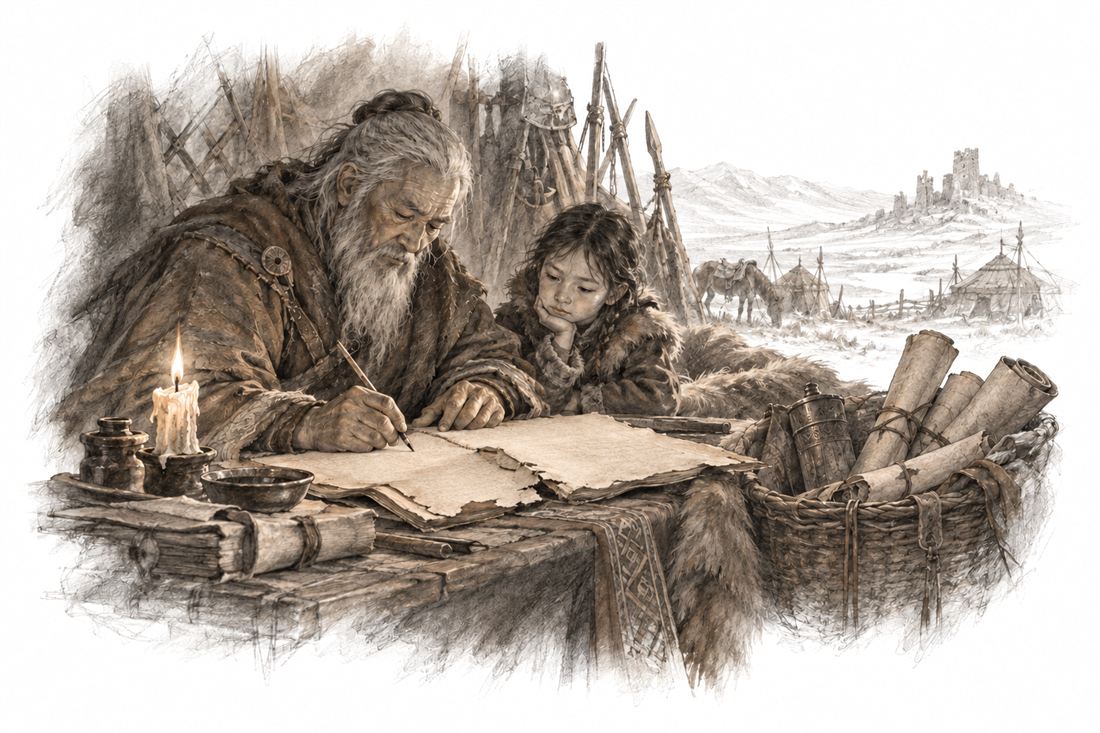
There were those who sought to protect the surviving knowledge, collecting damaged manuscripts, copying inscriptions, and recording the testimony of the elderly.
Yet even these efforts were imperfect.
A text might be copied faithfully for generations while its meaning was misunderstood from the beginning.
And when two histories disagreed, the people who had lived the truth were no longer present to correct them.
Thus the past receded, not into silence, but into a thousand competing voices.
III Kingdoms from the Dust
Time, which had taken so much, began to give something back.
Harvests improved. Roads were cleared. Settlements that had once struggled merely to survive grew into towns, and towns into cities.
The children of wanderers came to regard the lands of their birth as ancestral homes.
New kingdoms emerged.
Their rulers claimed authority through service, inheritance, conquest, or the consent of those they governed. Some adopted the customs of the ancient world, though their understanding of those customs was often little more than ceremony.
Others rejected the past entirely.
They fashioned new laws, raised new banners, and gave names to lands that had once belonged to kingdoms no living person remembered.
Across Scythia, trade returned.
Caravans ventured through the plains. Ships sought safe passage along altered coastlines. Miners entered mountains where ancient tunnels lay buried beneath centuries of stone.
The wilderness, long feared as a place of hunger and uncertainty, became once more a place of opportunity.
Yet reconstruction was not a single endeavor shared by all.
Some regions recovered swiftly, blessed with fertile soil and sheltered from the worst of the Sundering. Others remained desolate for generations.
The prosperity of one kingdom did not guarantee the prosperity of its neighbors.
There were border disputes, failed treaties, and wars whose causes would have seemed painfully familiar to the kings of antiquity.
But there were also alliances, flourishing markets, and periods of peace.
The world was neither restored to what it had been nor condemned forever to what it had become.
It was changing into something new.
IV Beneath the Foundations
As the new kingdoms prospered, they began to encounter the old world in earnest.
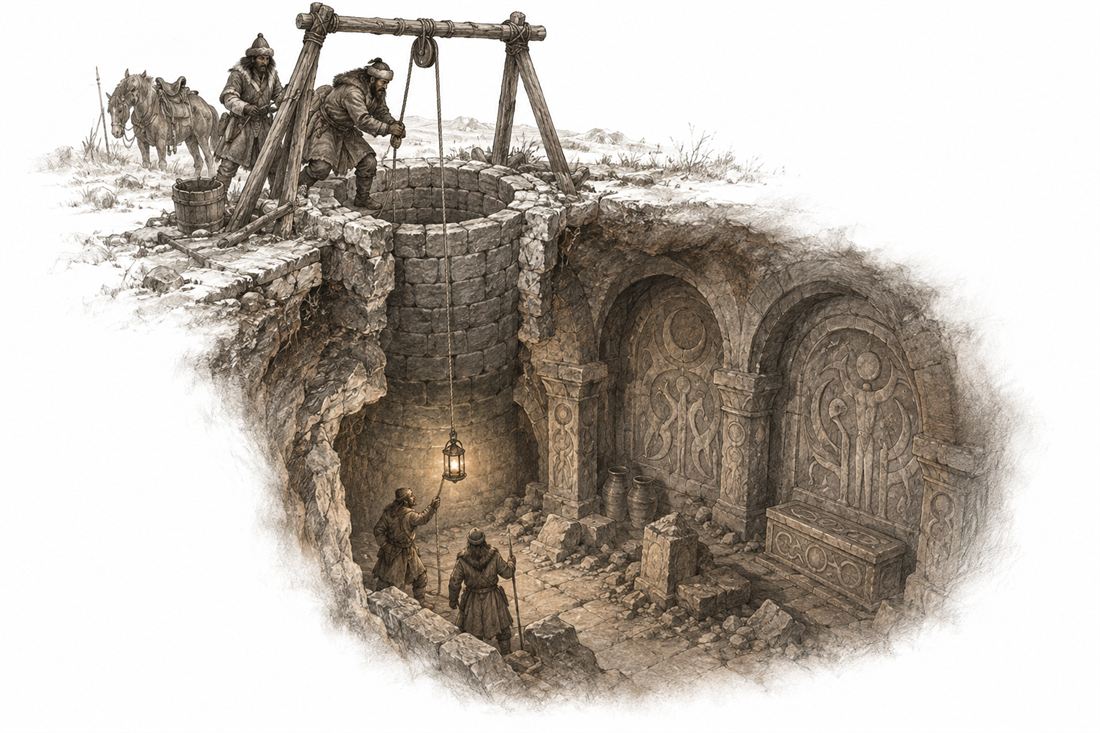
A well dug beneath a village might break through the ceiling of a forgotten chamber. A quarry might expose a wall bearing inscriptions older than any known language.
Farmers uncovered ornaments of impossible delicacy. Miners found passages that descended beyond the reach of their lamps.
Some discoveries were welcomed.
Ancient foundations offered strong ground upon which to build. Forgotten reservoirs could be restored. Fragments of old engineering sometimes yielded knowledge of immediate value.
Others inspired fear.
There were ruins in which no birds nested, chambers whose walls bore marks resembling neither toolwork nor ornament, and places where the earth seemed unwilling to surrender what lay beneath it.
Such accounts were often exaggerated.
But not always.
Scholars attempted to arrange these discoveries into a history of the world before the Sundering.
They found little agreement.
Some ruins appeared older than the Age of Crowns itself. Others suggested achievements beyond anything described in the surviving chronicles of the Rebirth.
The deeper they searched, the less certain they became that the history they had inherited was complete.
And so the old world remained beneath the new, its secrets guarded less by intention than by the passing of time.
V The Inheritance of Peace
The centuries of reconstruction did not end with a proclamation.
There was no ceremony to declare the world repaired.
There came instead a generation for whom the Sundering was no longer the defining event of life, but a distant calamity recorded in histories and remembered in fables.
Its people knew the names of their kingdoms. They understood the roads between their cities, the customs of their neighbors, and the obligations of their rulers.
They possessed laws, institutions, and ambitions of their own.
They did not regard themselves as survivors.
They were simply the people of Scythia.
The ancient catastrophe remained visible in the shape of the land, in the broken monuments scattered across the wilderness, and in the unanswered questions of scholars.
But life no longer revolved around its memory.
The kingdoms had learned to govern themselves, to trade, to negotiate, and, when necessary, to quarrel without bringing ruin upon the whole world.
Peace was neither universal nor unbroken.
It was, however, possible.
And after so many centuries, possibility had become a kind of hope.
There were those who looked upon the growing cities and imagined a future of greater prosperity, one in which the ingenuity of civilization might overcome the hardships that still burdened its people.
Others looked upon the same world and saw an inheritance rescued at terrible cost, something precious precisely because it could be lost.
Neither vision was born of hatred.
Both arose from a desire to leave the world better than it had been found.
And in the generations that followed, these hopes would find new voices, new institutions, and names that would become familiar throughout Scythia.
For the world had been rebuilt.
What remained was the question of what its people would choose to make of it.